
Ducted Air Conditioning vs Split Systems: Which Suits Your Home?
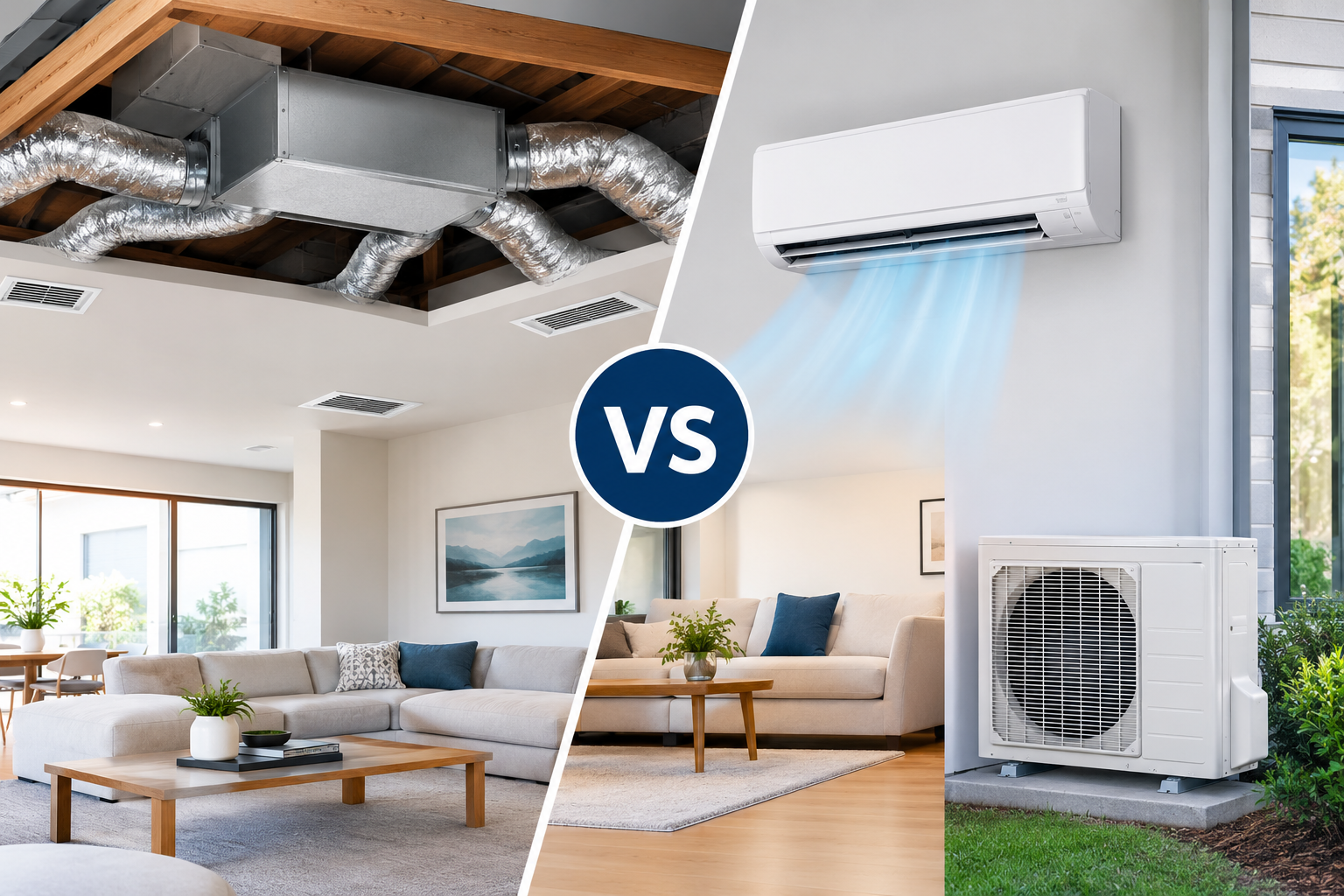
Choosing between ducted air conditioning and split systems is one of the biggest comfort decisions a Sydney homeowner can make. Both options cool and heat effectively, but they suit different floor plans, budgets and lifestyles. Sydney summers can swing from humid coastal heat to scorching western suburbs afternoons, and winter nights can get properly cold. The system you choose needs to handle all of it without blowing out your energy bills. This guide compares both options so you can decide with confidence.
How Each System Works?
Ducted Systems
A ducted system uses one central outdoor unit connected to a network of concealed ducts, usually installed in the roof space or under the floor. Conditioned air is delivered through discreet ceiling or floor vents, and you can control different zones from a single wall controller. The result is an even temperature throughout the home with no bulky indoor units on show. Because the ducts are hidden, this style is popular in new builds, large renovations and homes where appearance matters.
Split Systems
A split system pairs an outdoor compressor with one or more wall-mounted indoor units that cool or heat a single room or open-plan area. Each unit works independently, so you only run what you need. If you want several rooms covered without a full duct network, a multi-split air conditioning installation lets multiple indoor units share one outdoor unit.
Key Differences at a Glance
Coverage: Ducted systems condition the whole home, while splits target individual rooms.
Appearance: Ducted systems are almost invisible, while splits have visible indoor units on the wall.
Zoning: Ducted systems offer zones from one controller, while splits are controlled per unit.
Upfront cost: Splits are generally cheaper to install, while ducted systems cost more initially.
Best for: Ducted suits larger homes, and splits suit smaller spaces and targeted cooling.
Which Suits Your Home?
Larger Family Homes
If you have four or more bedrooms, multiple living areas or a double-storey layout, a ducted system is usually the more practical choice. One system handles every room, and zoning lets you switch off areas nobody is using. That keeps comfort consistent without managing five or six separate remotes.
Apartments, Units and Smaller Homes
For a one or two-bedroom unit or a compact townhouse, a single split system often delivers everything you need at a lower cost. It is quicker to install, needs no roof space for ductwork and is ideal for cooling a main living area. Strata rules in some apartment buildings also make split systems the simpler option.
Older Homes and Renovations
Older Sydney homes can have limited roof space, which affects whether ductwork will fit. In these cases, a multi-split or several individual split units may be the better solution. A site inspection is the best way to confirm what your property can accommodate.
Running Costs and Energy Efficiency
Running costs depend on system size, efficiency rating, how often you use it and how well it is maintained. Zoning gives ducted systems an advantage in larger homes, since you can limit conditioning to the areas in use. Splits are efficient for single rooms but can add up when many units run at once. If you are weighing the long-term numbers, these tips on keeping ducted running costs and energy bills down apply to any home.
Installation: What to Expect
Split systems are typically installed in a day, as the work involves mounting the indoor unit, placing the outdoor unit and connecting the refrigerant lines. Ducted installation is a bigger project, involving duct layout design, roof or subfloor work, vent placement and controller setup. Proper design matters here, because poorly sized or badly routed ducts lead to uneven airflow and wasted energy.
Maintenance and Lifespan
Both system types need regular care to perform well and last. Filters should be cleaned, coils checked and drainage lines kept clear. For ducted systems, the ductwork itself also needs attention, since dust and moisture can build up over time. A scheduled air conditioner servicing and maintenance visit helps catch small problems before they become expensive repairs.
Sydney Climate Considerations
Sydney's climate varies across the city. Western Sydney and the Hills District regularly see extreme summer heat, so a powerful, well-sized system is essential. Coastal areas like the Northern Beaches and Sutherland Shire deal with humidity and salt air, which can affect outdoor units over time. Inner West and North Shore homes often have a mix of period and modern layouts, which influences whether ducting or splits are more practical. Whichever suburb you live in, matching the system to your local conditions is key. You can see the areas we cover on our Sydney service locations page.
Making the Right Choice
There is no single best answer, only the best fit for your property. As a rough guide:
Choose ducted if you have a large home, want whole-house comfort and prefer a clean, hidden look.
Choose a split system if you want to cool one or two rooms, have a smaller budget or live in an apartment.
Choose a multi-split if you want several rooms covered without a full duct network.
Think about how you use your home day to day, how many people live in it and how long you plan to stay. A system that suits your lifestyle will always outperform one chosen on price alone. If you are leaning toward ducted air conditioning, a professional site assessment will confirm whether your roof space and layout can support it.
Why Sydney Homeowners Choose RD Air Masters?
RD Air Masters is a Sydney-based team with hands-on experience across ducted and split systems. We assess your home, explain your options plainly and recommend the system that genuinely fits, not the one that is most expensive. Our team handles everything from design to air conditioning installation and ongoing support, so you deal with one trusted local business from start to finish.
Frequently Asked Questions
1. Is a ducted system more expensive than a split system?
Yes, ducted systems generally cost more upfront because of the ductwork and larger installation. Over time, the cost per room in a large home can be competitive.
2. Can I install a ducted system in a double-storey home?
Often yes. Many double-storey homes use a ducted system with separate zones for each level, though roof and floor space will influence the design.
3. Are split systems cheaper to run?
For a single room, a split system can be very economical. In larger homes where several units run together, costs can add up.
4. How many zones should I choose?
It depends on your layout. Most homes benefit from separate zones for living areas and bedrooms so you only condition the spaces in use.
5. Do both systems provide heating?
Yes. Most modern reverse-cycle ducted and split systems provide both cooling and heating from the same unit.
6. How do I know which system is right for my home?
A site inspection is the most reliable way. A technician can assess your floor plan, roof space, insulation and budget, then recommend the right option.
Contact Us
Ready to find the right system for your Sydney home? Get in touch with the RD Air Masters team through our contact page or reach us directly.
Email: raj@rdairmasters.com.au
Phone: 0435 101 000
